
Billy Monsalve Duffo
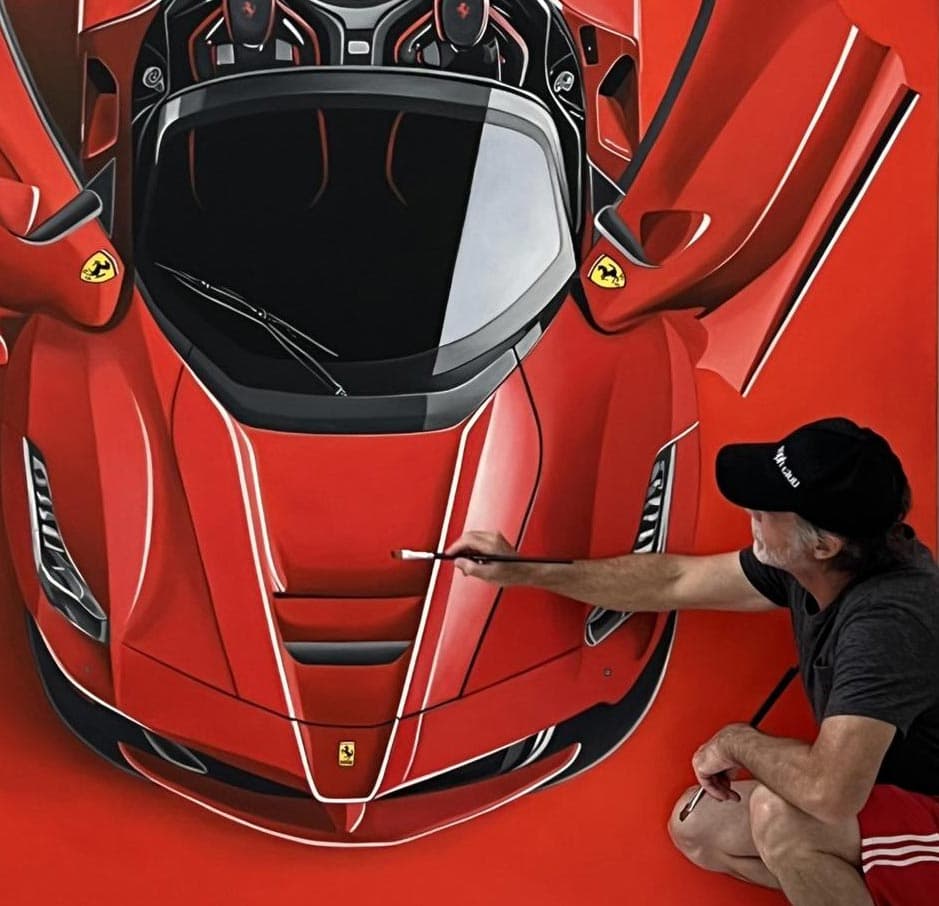
Billy was born in the United States in 1965 to Colombian parents and raised in Bogotá, Colombia, where he spent his formative years immersed in art and culture. At the age of seventeen, he relocated to Miami, Florida, where he now lives and works. His artistic sensibility emerged early and was shaped by the influence of celebrated Colombian masters Fernando Botero and Heriberto Cogollo—drawing inspiration from Botero’s commanding scale and Cogollo’s refined realism and masterful use of light. Largely self-taught, Billy’s early commercial success allowed him to later pursue formal studies at the Escuela de Bellas Artes in Cartagena, Colombia. Working primarily in oil, his paintings are inspired by everyday objects and moments—familiar elements elevated through careful observation and elegant execution. With a strong focus on light, shadow, and volume, Billy creates works that approach photorealism while maintaining warmth and presence. His paintings are defined by clarity, balance, and a quiet sophistication, inviting viewers to find meaning in beauty that feels both familiar and timeless.
Artist Works
EXPLORING THE WORK BY BILLY MONSALVE DUFFO
The ordinary object as a lasting subject
Billy Monsalve Duffo's oil paintings ask what happens when a familiar object receives the full attention normally reserved for a portrait. The subject might be a vehicle, an animal, or an object prized for its design. Recognition arrives quickly, yet recognition is only the beginning. Scale, controlled highlights, and the relationship between a form and its surrounding space encourage a second, slower look. The painting separates the thing from its everyday use. It becomes a subject with weight, character, and a particular visual rhythm. A viewer does not have to share the artist's enthusiasm for the object to appreciate the precision of that transformation.
The biography above describes his interest in everyday things and the role of light in his realism. The artworks below allow a closer examination of how that interest changes from one subject to another. A polished surface reflects its environment; fur or foliage scatters light instead. The artist's decisions about each texture help determine whether a painting feels theatrical, intimate, or still. This is a useful way to approach contemporary realist painting: not as a contest to duplicate a photograph, but as a sequence of deliberate choices about what deserves sustained attention.
Precision, time, and the act of looking
An earlier series titled Máquinas del tiempo, or Machines of Time, focused on luxury watches. A report in Revista Cromos described Monsalve Duffo painting these mechanisms live and recording their minute details in oil. A watch is an apt subject for a painter interested in precision. Its components measure time while the painting itself requires time: the time taken to observe, compose, and build a convincing image. The finished canvas can make those hours disappear behind a seemingly effortless surface. Knowing something about the labor behind the image can change how one looks at each edge, reflection, and small interval of shadow.
There is also a productive tension between a device that measures passing minutes and a painting that holds one view in place. The viewer may first notice the recognizable design, then become aware of the patient construction required to make it legible. This tension carries into other subjects in Monsalve Duffo's practice. A car or yacht is associated with movement, yet on canvas its motion is suspended. A flower seems fleeting, yet the painter gives its color and form an extended life. Such contrasts make the work more than a technical exercise. They allow an object to become a way of thinking about attention and duration.
Cars as studies in form and reflected light
The current DelPuma Fine Art selection includes LaFerrari Aperta and Lamborghini SVJ Roadster, both listed as oil on linen. Their titles identify specific automotive subjects, but the paintings need not be understood solely as tributes to brands. A sports car is a complicated arrangement of curves, openings, hard edges, and reflective planes. Rendering it convincingly means understanding how light changes direction across the body and where a bright highlight must stop. A close look can reveal how the painted reflections organize the image even before the viewer reads the vehicle as a whole.
These works also invite comparison with conventional automotive photography. A camera captures light in an instant; painting can adjust and emphasize its relationships over a much longer process. A dark contour may sharpen the sense of speed, while a broad illuminated area can give a sleek surface a monumental presence. The listed size of LaFerrari Aperta is substantial, which matters when considering its impact beyond a phone screen. At full scale, the viewer encounters not just a miniature picture of a machine but a composition that occupies physical space. That shift from image to object is part of the experience of collecting a large realist painting.
From engineered surfaces to living forms
Bison, Bella, Farfalla, and Blossom point toward a different set of questions. Their titles suggest animal, figure, butterfly, and floral associations, although a title alone should never substitute for looking at the image. Together they show that Monsalve Duffo's interests are not confined to manufactured luxury. Organic subjects can challenge the painter in other ways. A petal's thinness, the volume of an animal, or the apparent softness of a living surface calls for different transitions than metal or glass. The painter must decide where accuracy helps the image and where restraint leaves room for the viewer's imagination.
Compare one of these works with a car painting and the range of the practice becomes clearer. The visual language may still depend on close observation, strong modeling, and carefully managed contrast, but the emotional register can shift. A machine may project energy and design; a living subject may carry vulnerability or quiet presence. Neither response is guaranteed by the subject alone. It emerges from color, cropping, scale, and the treatment of background. This makes Monsalve Duffo's contemporary oil painting interesting to viewers with different tastes: the commitment to craft remains recognizable while each subject creates a new viewing experience.
Narcy and the power of a memorable image
Narcy is among the works currently listed by DelPuma Fine Art and has also been featured in the site's homepage Selections. That prominence makes it a useful example of how a single painting can lead a viewer into an artist's larger body of work. An arresting image succeeds initially by being visible at a glance, but a lasting painting offers more after that first encounter. Ask how the composition directs the eye. What is made prominent, and what is deliberately withheld? Where do the highlights gather, and how does the surrounding field support the central form?
A homepage image is necessarily small and fleeting. The artwork page slows the encounter by providing the title, medium, dimensions, and an opportunity to study the work more closely. This distinction is important for realist art because detail can be part of its meaning. Subtle changes in tone and painted surface may not survive a thumbnail. The right question is not simply whether the work is immediately attractive, but how it continues to behave as the viewer spends more time with it. Narcy can be approached as an invitation to explore the artist's choices rather than a complete statement of his practice.
The painterly side of realism
Monsalve Duffo's images may look close to life, yet their effect is inseparable from paint. Oil allows long transitions and saturated darks, but those possibilities still require judgment. A convincing reflection depends on its neighbors; a rounded form depends on the balance between light, middle value, and shade. A seemingly simple object may therefore involve a complex series of decisions. The paint does not disappear when the image succeeds. It becomes the means by which the viewer can move from an immediate impression of reality to an awareness of construction.
This distinction helps explain why photorealistic work can remain engaging even when photographs of similar objects are plentiful. The artist chooses the view, simplifies or intensifies relationships, and establishes the pace at which details are discovered. A collector might be drawn to the subject at first, but stay with the painting for its handling of color or the way a contour holds the composition together. Looking for these decisions avoids reducing realism to a single question of likeness. It treats the artwork as a made object, with the accumulated intelligence of its making visible across the surface.
A practice seen across materials and scale
The works currently offered here include oil on canvas and oil on linen. Those labels identify supports, not an entire technique, and they should not be used to invent a process that the artist has not described. They do, however, remind us that a painting has physical dimensions and a material presence. A linen support can carry a different weave from canvas; a large work changes the distance from which it is first read. Online viewing is a starting point, while the listed measurements help a collector imagine the object in a room and consider how the image might feel at its actual scale.
Earlier accounts of the artist also describe murals made for hospitality and commercial settings. That history suggests an interest in images that must communicate beyond a close, private encounter. It does not make a small canvas and a mural interchangeable. One can instead ask how Monsalve Duffo manages impact at different sizes. Does the composition establish a clear shape from a distance and reward a closer look with detail? Can an object remain recognizable while becoming visually monumental? These questions connect the broad presentation of his work to the intimate decisions visible in any one painting.
Choosing a Billy Monsalve Duffo artwork
The current selection spans twelve approved works with dates from 2022 through 2026. It offers more than one entrance into the artist's realism: automobiles, a yacht, animal and floral subjects, and images whose titles suggest other kinds of narrative. Consider what initially catches your eye, then compare that attraction with the work's formal character. Is your attention held by a concentrated subject or by a larger relationship between the subject and its setting? Does a piece feel energetic, meditative, or somewhere between the two? The answers can help distinguish a passing preference from an artwork you will want to live with.
DelPuma Fine Art's artwork pages supply the current medium and dimensions for each piece, and inquiries can clarify questions that a screen cannot answer. A thoughtful decision begins with the image but also attends to scale, surface, and placement. Monsalve Duffo's paintings reward this kind of careful viewing because their recognizable subjects are only the outer layer of their appeal. Light, shadow, volume, and pacing shape the experience long after the object has been named. The best choice may be the painting that continues to reveal those relationships on a second and third look.
Research: Colombian Consulate profile and Revista Cromos report. Artwork titles, dates, and media are from current DelPuma Fine Art listings.