Carol Moreno
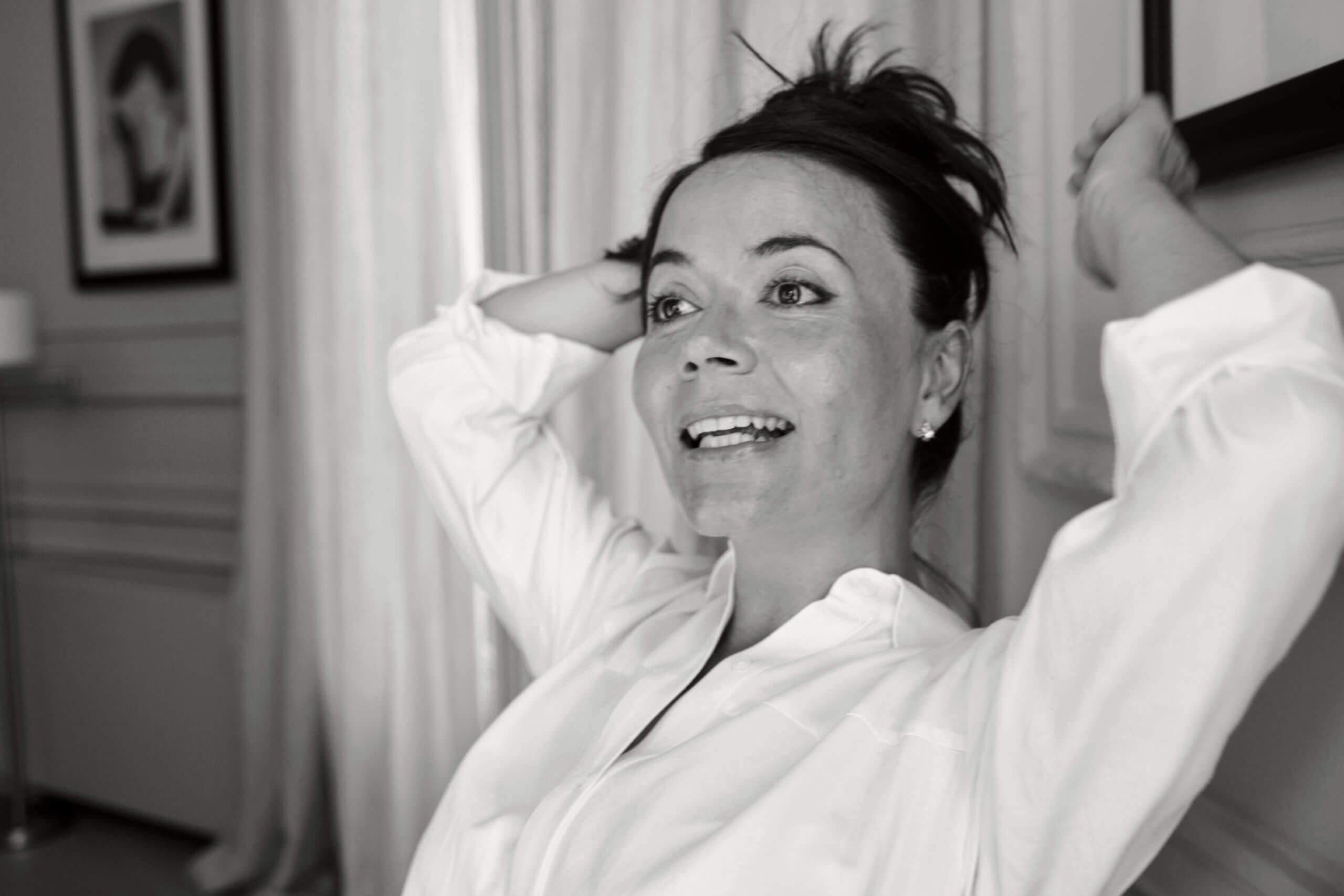
In 2005, she founded her own studio, Carol Moreno, marking the beginning of an exceptional career built on craftsmanship, creativity, and collaboration. Over the years, she has worked with prestigious brands such as Grupo Revlon (The Colomer Group), Moët & Chandon, Veuve Clicquot, ColaCao, and Mahou, as well as luxury hotel chains across Europe. Since 2010, her brushstrokes have become part of the timeless elegance of Hotel El Palace Barcelona (formerly the Ritz), where her paintings, murals, and portrait collections lend a distinct atmosphere of sophistication and artistry. Carol’s talent for harmonizing art with interior architecture has made her a highly sought-after collaborator among designers and stylists. She has been featured as a guest artist at Casa Decor, Spain’s most prestigious interior design exhibition, where her work has illuminated spaces created by leading industry figures. Her collaborations extend into the decorative arts, with custom designs for Coordonné, Tres Tintas, and Kemen Wallcoverings, translating her painterly vision into contemporary wallcovering collections. Her artwork has been exhibited in national and international galleries and art fairs, including Escat Gallery (Barcelona), Modern Art Salon (SAM) in Madrid with Helarea Gallery, and Flyer Art Gallery in Venice. Her solo exhibition, “Onírico”, at Herraiz Art Gallery in Madrid, showcased the depth of her imagination and her signature synthesis of realism and dreamlike composition. Widely recognized in the world of design and culture, Moreno’s work has been featured in leading publications such as Architectural Digest (AD), La Vanguardia, HOLA! Living, Mujer Hoy, Revista Interiores, Nuevo Estilo, Tatler Home, and Love Happens Magazine. Her recurring presence in AD Magazine and Revista Interiores underscores her role as an artist whose vision transcends traditional boundaries—where art becomes architecture, and creativity inhabits space. Constantly evolving, Carol Moreno continues to expand her artistic reach through new media, materials, and collaborations. Her work stands as a testament to the enduring power of art to shape atmosphere, evoke emotion, and transform the environments we live in.
Artist Works
EXPLORING THE WORK BY CAROL MORENO
Painting that changes the atmosphere of a room
Carol Moreno approaches painting as an encounter between image and space. Her canvas works can be appreciated individually, yet they also reveal a practiced sensitivity to the rooms in which art is seen. A painting changes a wall through color, scale, and rhythm; the room, in turn, changes how the painting is perceived. The biography above introduces Moreno's collaborations with designers and her work across interiors. The artworks below make it possible to look beyond those career facts and consider the visual decisions that give her paintings their presence. The question is not only what a painting depicts, but what kind of atmosphere it establishes around itself.
Moreno's own description of her practice emphasizes dreamlike luxury and transformation. That language is best tested against the artwork rather than accepted as a promise. Does an image invite repose or create a strong visual event? How does its palette respond to natural and artificial light? Can a work hold attention from across a room and reward a closer inspection? These questions help distinguish an artwork from decoration without pretending that placement is irrelevant. Moreno's practice suggests that visual experience and the architecture of everyday life can be considered together.
The waterlily as a changing subject
The present DelPuma Fine Art selection includes BW Waterlillies, BW Waterlillies 2, and G Waterlillies, all listed as 2025 acrylic paintings on canvas. The repeated subject is an opportunity to compare rather than assume sameness. A waterlily can be approached as a botanical form, a floating shape, a reflection, or a way to organize light across a broad surface. Its position between water and air gives the image a natural tension: rooted below, visible above. Moreno can draw on that tension without making every painting a literal study of a pond.
Look at how each work guides the eye. Does a group of forms establish a strong center, or does the composition distribute attention across the canvas? Do dark and light passages suggest depth, or keep the image closer to the surface? The initials in the titles distinguish works, but they do not explain every difference a viewer might find. It is better to compare the actual color, spacing, and treatment of the subject. The value of a small group of related paintings lies in seeing how many distinct visual solutions one artist can find within a recognizable motif.
A palm, a horizon, and the idea of calm
Calm Palm, also listed as a 2025 acrylic-on-canvas work, offers another natural point of reference. Its title joins a plant form to a mood. The viewer may expect ease, but a painted sense of calm is something the artist has to construct. It can arise from broad intervals of space, restrained contrast, softened edges, or a measured arrangement of color. None of these choices follows automatically from the subject. A palm can be dramatic or delicate, monumental or familiar, depending on how it is placed within the image.
Consider Calm Palm beside the waterlily works. Both sets of titles evoke nature, yet their structures may lead the eye differently. A palm can draw attention upward through trunk and frond; a waterlily may encourage lateral movement across a surface. A vertical emphasis can change how a painting relates to the surrounding wall, while a more expansive arrangement can make the room feel open. These are possibilities to test against the pictured works and their listed dimensions, not rules that every painting must follow. Moreno's work rewards that kind of specific comparison.
Acrylic and the construction of visual depth
All four paintings currently shown here are identified as acrylic on canvas. The medium can support crisp marks, layered color, and quick shifts between opaque and translucent effects, though the precise method in any individual work should be judged from the object. The important point is how Moreno uses a painted surface to create an impression of distance or nearness. A flower or leaf may be rendered with enough clarity to anchor the composition, while the surrounding area becomes more atmospheric. The eye moves between these levels of certainty.
Online images can make a painting seem uniformly smooth even when its surface contains significant variations. Looking at an artwork at full size, or requesting closer views, can reveal whether a passage is built through thin layers, more assertive marks, or shifts in finish. Such details matter for a collector considering how a work will behave in changing light. They also matter for interpretation. A luminous scene is not simply a pictured place; it is a surface carefully made to produce that impression. Moreno's contemporary painting can be read through both the imagined setting and the physical decisions that bring it into being.
From canvas to mural
Moreno's career also includes murals and work conceived in relation to interior architecture. A mural changes the terms of viewing. It may be encountered while someone walks through a room, sits nearby, or sees only part of it from an adjoining space. The artist must therefore consider scale, sight lines, and the character of the surrounding materials. A canvas is more movable and contained, but the experience of thinking at architectural scale can inform its composition. An image may need to make a strong impression from a distance and still preserve interest for someone standing near it.
Her official website describes commissions that begin with the approximate size of the desired work, a painting that inspires the client, and a photograph of the intended space. That process shows attention to context without implying that an artwork merely matches a room. The best relationship can be a conversation rather than a color-matching exercise. A painting might echo a room's quietness or provide a carefully chosen counterpoint. The four works currently offered here can be considered in this spirit: as individual artworks with their own character and as potential presences within a lived environment.
Nature, memory, and the imagined place
Botanical imagery can be specific and open-ended at the same time. A waterlily has a recognizable shape; a palm can suggest a climate or a remembered landscape. Yet neither title tells us exactly where a painting is set. Moreno's images can invite viewers to bring their own associations of travel, garden, water, or rest without insisting on a single location. This openness is especially useful in a room where the work is encountered repeatedly. Its meaning can shift with the viewer's mood and the light of day.
The artist's broader interest in oneiric, or dreamlike, settings helps explain why a natural motif need not be purely documentary. A painting can begin with a plant and move toward an atmosphere that feels remembered or imagined. Details may be selected for their emotional effect rather than for botanical completeness. This does not make the work vague. It requires a different kind of precision: knowing which edges, colors, and intervals give a viewer enough to enter the image while leaving room for interpretation. The result can feel both familiar and slightly outside ordinary time.
What design experience contributes to fine art
Moreno's work across painting, wallcovering, murals, and interiors offers a perspective on how visual patterns live with people. A repeated motif can create rhythm; a large field can calm a busy room; a concentrated detail can become a point of return. These principles matter in design, but they are also tools of painting. The difference lies in the particular decisions the artist makes for each work. A canvas can resist a room as much as it complements one, setting its own pace against the architecture around it.
For this reason, a collector need not choose between aesthetic pleasure and serious attention to form. Notice how a composition balances activity and stillness, how its colors change at different distances, and whether its central image remains engaging after repeated viewing. The biography's account of prestigious collaborations is context, not the measure of an individual painting. The artwork itself must sustain the encounter. Moreno's strongest works invite that attention while remaining capable of shaping the mood of a space in a direct, bodily way.
Living with a Carol Moreno painting
The current selection is focused: four acrylic paintings from 2025, with waterlily and palm subjects. This concentration makes comparison possible. Begin with the image that draws you in, then look again at the other works for differences in palette, movement, and openness. Does one offer a quiet field for contemplation while another asks for a more active gaze? How might each relate to the light and scale of the room where it would live? The artwork pages provide dimensions and other listing details that help turn a visual preference into an informed choice.
An image on a screen is a useful invitation, not a complete substitute for a painting's physical presence. Consider the work's surface, the amount of wall it occupies, and the distance from which it will most often be seen. Moreno's art is particularly responsive to those conditions because her practice treats painting and space as connected. A well-chosen piece can offer more than an immediate impression of beauty. It can create a recurring moment of attention, allowing the viewer to notice new relationships between natural form, painterly atmosphere, and the room around it.
Research: Carol Moreno's artist biography and official studio and commission information. Artwork titles, dates, and media are from current DelPuma Fine Art listings.