Marta Fabregas
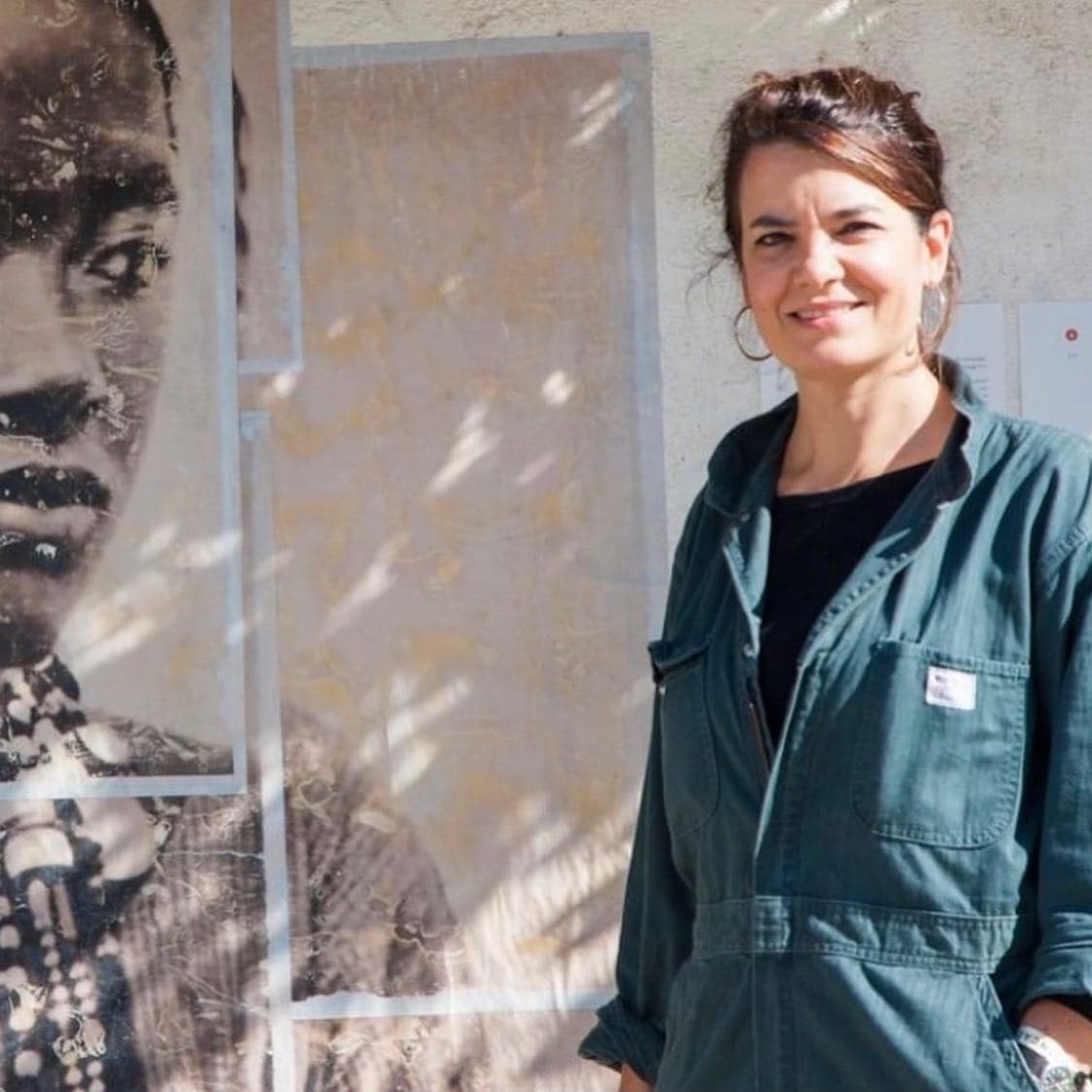
Fabregas was born in Barcelona, Spain, on April 17, 1974, and from an early age, she has been drawn to the power of the image. Everything visual forms part of her DNA—her life and work are deeply rooted in the language of light, composition, and emotion. Her decision to devote herself to photography allowed her to merge her artistic sensitivity with her entrepreneurial spirit, building a career that bridges creativity and precision. Educated in photography at the Institut d’Estudis Fotogràfics de Catalunya (IEFC), Fabregas began her professional journey working in several studios across Barcelona. In 1998, she co-founded Estudi La Fotogràfica, a space that has since become both her creative laboratory and professional studio. There, she has developed an extensive body of work encompassing personal artistic projects, commissions for museums, and collaborations with businesses and private collectors. What defines Fabregas’s photography is her instinctive ability to capture beauty with immediacy and grace. Her work illuminates what might otherwise go unnoticed—revealing brilliance, sparkle, and emotion in the simplest of moments. Every image she creates carries her distinct signature: a blend of empathy, sensitivity, and creative intuition that transforms observation into art. Through her lens, Fabregas transcends documentation, using photography as a tool for connection—a visual language that celebrates light, authenticity, and the quiet power of presence.
Artist Works
EXPLORING THE WORK BY MARTA FÀBREGAS
Photography after the photograph
For Marta Fàbregas, an existing photograph can be the beginning of an artwork rather than its final statement. She works through images, altering their scale, context, material, and relation to other fragments. Her term transphotography describes this movement through the photograph into another visual language. A found image may retain the trace of its original time while becoming part of a new composition made in the present. The process allows viewers to feel the distance between the historical record and the living questions that record can raise. It also resists the idea that a photograph's meaning is fixed at the moment it was taken.
The brief biography above describes Fàbregas's attraction to images and her photographic career. Her art asks a different question: what responsibilities arise when an image of someone else is carried into a new context? She does not treat archival photographs as neutral raw material. In projects such as Colonized, she looks for people whose identities and contributions were diminished by the conditions under which they were represented. A new artwork cannot recover a lost life completely, but it can refuse to let the image remain an unquestioned relic. The visible acts of cutting, transferring, and reassembling become part of that refusal.
The ethical stakes of Colonized
Fàbregas explains that Colonized began with historical photographs of women from different social positions, including people whose stories were rarely preserved in their own words. Her aim is to make viewers ask questions about identity, power, and the ways women have been defined by others. The title names a condition rather than a single historical event. A portrait could be shaped by colonial power, social class, gender expectations, or the assumptions of the person behind the camera. The project asks us to look at those frames as well as at the face within them.
The current DelPuma Fine Art selection includes Colonized No. 101 and No. 36. One catalog description identifies an 1891 photograph of a South African woman choir singer as the source for No. 101. The specific source matters because it reminds viewers that this is not an anonymous generic figure invented for a theme. There was a person, a moment, and an earlier image with its own history. The new work offers an interpretation, not a replacement for that history. A responsible viewer can appreciate the artistic transformation while remaining aware of the distance between the surviving photograph and the full life it cannot tell.
How transphotography is built
On her official site, Fàbregas describes beginning with the search for a historical image, then altering it digitally through cropping, scaling, and other adjustments. She works with watercolor paper, ink, glue, and additional materials before transferring fragments into a larger composition. The process is neither purely digital nor a simple handmade collage. It moves back and forth between image file and physical object. That circulation matters because each stage can change the viewer's sense of time. A century-old portrait meets contemporary tools, then takes on texture and seams that belong to the present work.
Her account emphasizes the time involved in selecting, modifying, and reassembling. A photograph that once appeared to offer immediate access becomes slow to read. Fragments may line up but still show their joins; a surface may look unified while revealing several acts of intervention. These choices make the viewer conscious of mediation. We are not seeing an untouched past through a transparent window. We are seeing an artist think with an archival trace, acknowledging its power and its limits. That awareness is one of the strongest qualities of contemporary photographic collage when it handles historical subjects with care.
Fabric, dignity, and the risk of embellishment
Fàbregas describes adding textile references and color to some historical portraits as part of an effort to dignify the women represented. The gesture can be visually sumptuous, but it is more than decoration. A fabric detail may challenge the way the original image positioned its subject, suggesting agency or presence that an earlier frame ignored. At the same time, the work leaves a difficult question open: can an artist truly restore dignity through an image, or can she only invite us to recognize dignity that was always there? The strength of the series lies partly in allowing that tension to remain.
In Colonized, an intervention is visible as intervention. A seam, changed garment, or new color does not claim to be a historically exact reconstruction of a person's appearance. It makes the present artist's act of looking legible. This distinction matters. An artwork can honor an archival subject without pretending to speak in that person's voice. Viewers can consider the beauty of the reassembled image and the ethical unease that accompanies it. The work becomes a dialogue about memory, representation, and the limits of repair, rather than a comforting claim that the past has been corrected.
Perfect Imperfect and another kind of pressure
The current selection also includes several Perfect Imperfect works. The title places two judgments beside one another without resolving them. Perfection can be an ideal, a demand, or a mask; imperfection can be treated as a flaw or reclaimed as evidence of lived experience. In Fàbregas's practice, the physical language of collage gives that tension a visible form. A cut, overlap, or altered photographic surface can resist the fantasy of a flawless image. The work can remain beautiful while making its own construction and interruption part of what beauty means.
The individual DelPuma listings identify vintage photographic sources for Perfect Imperfect No. 12 and No. 05, including images dated to the 1940s. Those details place the works in relation to a particular era's visual standards without determining every meaning in advance. A beach photograph, for instance, can carry social expectations about bodies and leisure as well as a personal moment recorded in time. Fàbregas's interventions ask the viewer to consider how such images travel into the present. What seems charming at first may hold a more complicated history of who was visible and how they were expected to appear.
Origins and the question of belonging
Origins No. 3, listed here as transphotography and collage on canvas, makes the material process explicit. The title may evoke ancestry or beginnings, but it can also prompt a question about where an image itself begins. Is the source photograph the origin, or the encounter that led the artist to choose it? Does the new composition preserve an older identity, or create a different one? These questions need not be answered in a single direction. They are part of the productive uncertainty that arises when a photograph is moved through several techniques and contexts.
The canvas support also changes the work's status. A photograph often suggests an editioned image or documentary record; a mixed-media object on canvas asks to be approached as a constructed, singular surface. Its physical proportions and texture can make the viewer conscious of the artist's decisions in a way a small archival print might not. This does not make the original photograph less important. It clarifies that Fàbregas is creating a new object in conversation with it. The past remains present, but it is not left untouched or made to stand alone.
From Sunrise to Sunset and the span of a day
From Sunrise to Sunset No. 24 is described in the DelPuma catalog as mixed technique and collage with vintage photography and watercolor paper on canvas. Its title frames time differently from the century-spanning historical concerns of Colonized. A day has a beginning and an end, yet it can contain innumerable encounters and changes of light. The work may invite the viewer to think about duration not as a simple timeline but as something assembled from fragments. The materials support that reading: different photographic and paper elements are brought together within a single field.
Fàbregas's own account of transphotography describes the past in the archival image, the present in the act of intervention, and the future in the viewer's response. This three-part sense of time is a useful way to approach From Sunrise to Sunset without claiming to know every intended symbol. The work exists at the meeting point of what was once photographed, what the artist has made now, and what a viewer may carry away. A title about a day's passage can become an opening into a much longer conversation about memory and visual inheritance.
Looking with Fàbregas at DelPuma Fine Art
The current DelPuma Fine Art selection spans Colonized, Perfect Imperfect, Origins, and From Sunrise to Sunset. Together, the works allow a viewer to compare several uses of found photography and mixed media. Begin with the source details where they are given, then look at how the artist has changed scale, added material, and made joins visible. A photograph can seem to testify to a single instant, while the reworked object reveals several times at once. The individual artwork page supplies the medium and dimensions needed to understand each piece as more than a reproduction.
Marta Fàbregas's contemporary photographic art is compelling because it does not allow the viewer to remain passive before an attractive historical image. The works can be visually graceful, but they also ask who was allowed to be seen, who controlled the earlier image, and what a present-day artist can responsibly do with it. Those questions do not diminish the work's beauty. They give that beauty a moral and historical depth. The short biography above explains the artist's path; the pieces beneath it show how she turns looking itself into an act of inquiry.
Research sources: Marta Fàbregas's creative-process notes and her official project overview. Artwork details are from the current DelPuma Fine Art listings.