Harold Rubio
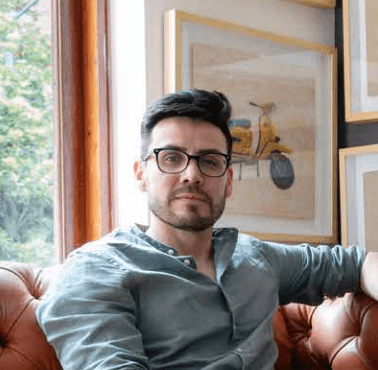
Harold Rubio (Bogotá, 1985) is a contemporary visual artist whose work transforms familiar cultural symbols into layered reflections on identity, memory, and desire. Working primarily with plastilina in mixed media, Rubio elevates an unconventional material often associated with childhood into a sophisticated artistic language that challenges traditional ideas surrounding fine art, beauty, and cultural hierarchy. Drawing inspiration from classical painting, religious iconography, editorial imagery, popular culture, and Latin American landscapes, Rubio creates richly textured works that blur the boundaries between painting and sculpture. His compositions reinterpret recognizable images through a distinctly contemporary and tropical lens, inviting viewers to reconsider the narratives embedded within art history and visual culture. Rubio’s practice frequently explores the emotional and symbolic weight carried by everyday objects—cars, motorcycles, sneakers, luxury brands, and magazine covers—revealing how these items become markers of aspiration, identity, and collective memory. In parallel, his celebrated series Paraísos Reimaginados and Cruce de Íconos recontextualize canonical Western imagery through vibrant Colombian landscapes and contemporary cultural references, offering a powerful meditation on representation, beauty, and decolonization. His work has been exhibited internationally at Palm Beach Modern + Contemporary, SCOPE Miami Beach, AAF Brussels, Afordable Art Fair Amsterdam, Art Market Budapest, and Kunsthalle Darmstadt in Germany, among others. Rubio has also participated in numerous museum, charity, and institutional collaborations, including projects with Disney Colombia, Renault Colombia, Maestro Cares, and MAMBO. Today, Harold Rubio continues to build a distinctive body of work that merges technical precision, cultural commentary, and visual seduction—creating pieces that are at once playful, critical, and unmistakably his own.
Artist Works
EXPLORING THE WORK BY HAROLD RUBIO
The surface that asks for a second look
Harold Rubio's work can make a familiar image appear recognizable from across a room and unfamiliar a moment later. The change happens when the viewer approaches and sees how the surface has been built. What may initially read as paint is composed through a demanding use of plasticine. Lines, ridges, and transitions of color give the image a physical presence that a reproduction can flatten. This movement between distant recognition and close inspection is central to the experience. The subject attracts the eye, but the material keeps it there. Contemporary art made with plasticine asks to be judged not by the material's associations with childhood but by the precision and expressive range the artist draws from it.
Rubio has explained in an interview that his chosen plasticine hardens and is different from the soft material used in children's play. That distinction matters for understanding the finished object without treating it as a conservation guarantee. The medium can hold fine textural decisions, from a broad passage of color to a narrow detail that changes an expression or edge. Looking closely at a work, one can ask how the direction of each modeled strand affects the image. The answer is often as important as the recognizable figure or cultural symbol that first led a viewer to stop.
A material associated with play, used with rigor
Plasticine carries memories of making things by hand without fear of revision. Rubio preserves the tactile appeal of that material while using it with the discipline of a sustained visual practice. The contrast is productive. The viewer may expect an informal object, then encounter a carefully controlled composition whose color and relief have been planned across a large field. The artist has spoken about wanting to carry a material from childhood into adult expression. That trajectory is not merely biographical; it can be seen in the work's ability to hold pleasure and serious inquiry at the same time.
Reports on his process describe works that can take months to complete. The time invested is visible in the density of decisions across the surface. Each color must be placed in relation to its neighbors, and each modeled passage contributes to an overall image that has to remain legible. This is a useful reminder that labor is not automatically artistic value, but it can be a means of thought. Rubio's persistence with an unconventional medium lets him ask what happens when a culturally familiar image is remade through slow, tactile accumulation. The result is neither a simple copy nor a quick visual joke.
Precision, color, and the memory of machines
In an interview with El Espectador, Rubio connected his sensitivity to exact colors with childhood time spent around his father's automobile restoration workshop. This detail offers a way to look at the cars and motorcycles that appear in his larger body of work. A vehicle is not only a sleek emblem of speed or status. It can also carry the memory of maintenance, craft, and a family environment in which color had to be chosen precisely. The subject and the making thus meet in an unexpected way: an image associated with mechanical production is reconstructed through thousands of small manual decisions.
The same interview describes how images of everyday objects can become markers of a particular time and place. That helps explain why a vehicle, a sneaker, or a cover image can feel emotionally charged without being a traditional portrait. Such objects travel with us through childhood, work, popular culture, and aspiration. Rubio's handling of their surfaces slows down recognition and makes room for these associations to emerge. He does not need every viewer to share the same memory. The point is that a familiar object can become a meeting place for personal and collective experience when it is given the scale and attention of an artwork.
Art history seen through a new material
Rubio's practice engages with canonical images and the visual authority that surrounds them. Reinterpreting a historical reference in plasticine changes more than its texture. It brings a material associated with play into conversation with images that institutions have often treated as untouchable. The encounter can be witty, but it can also make a serious point about who gets to speak through art history. A familiar composition becomes available for alteration, addition, and a different cultural setting. The viewer can recognize an echo of the past while seeing how the present rearranges its terms.
This dialogue is especially effective when the new material remains visible. If plasticine disappeared entirely into illusion, the work would lose part of its argument. Its ridges and handmade marks insist that reinterpretation is an action performed now, by a particular artist. Rubio's tropical and Colombian references can shift the emotional center of an image that once seemed settled. The result need not reject the original outright. It can make it less singular, less final, and more open to viewers whose histories were not represented in its earlier form. That is one way contemporary figurative art can expand the conversation rather than simply repeat it.
Popular culture as shared but unequal memory
A character, musician, logo, or fashion object may be instantly familiar to one person and almost unknown to another. Rubio uses that uneven familiarity as part of his visual field. Recognition can draw the viewer in, but it does not settle the meaning of a work. A pop-cultural image may carry affection, critique, aspiration, or nostalgia depending on the person looking. The material translation adds another layer: an image first known through a screen, printed page, or product is rebuilt as a textured physical object. Its pace changes from something consumed quickly to something that asks for time.
The current selection includes titles such as Michael Pop Eternity, Nina Simone, Cookie Kingdom, and Cookie and Elmo. These works should not be treated as interchangeable because their references are all widely known. Their titles suggest different registers of music, childhood media, and public image, but the work's specific composition determines what each reference can do. Compare how a subject is framed, where color concentrates, and how texture directs the eye. The strongest experience may come when a familiar figure becomes less certain than expected, opening questions about how an image entered our memory in the first place.
Why a title can complicate a first impression
Other listed titles—Toxic Masculinity, The Last Great Bison, Silent Gold, Beyond the Moon, and The Thinking Frog—point to very different emotional territories. They suggest that Rubio's practice is not limited to one type of icon or one tone of commentary. A title can supply an argument, a joke, or an atmosphere, but it should be tested against what the image actually shows. Toxic Masculinity, for example, signals a critical subject; The Thinking Frog invites a different expectation. The viewer's task is not to make every work fit a single theory of the artist. It is to meet each image on its own terms.
This variety matters for collectors. Choosing only by a recognizable reference can overlook a work whose formal handling or emotional tension is more compelling. The catalog image offers an entry point; the medium, dimensions, and visual details help complete the decision. A careful comparison of two Rubio pieces can reveal how his technique adapts to different subjects. The same hand-built plasticine surface can feel exuberant in one setting and restrained in another. It is the relation between subject and execution, not the novelty of the material alone, that gives each work its particular force.
The long view of a large body of work
A 2025 El Espectador interview described a presentation of more than 120 large-format works by Rubio. The number is notable, but its value for a viewer lies less in scale than in the opportunity to see sustained questions unfold across many images. Repeated attention to memory, national identity, consumer objects, and art-historical motifs suggests a practice with several lines of inquiry rather than one signature trick. The artist can return to a familiar theme and change its emphasis through subject, color, or composition. Looking at the current DelPuma selection as part of that broader practice encourages a more patient reading.
No short text can substitute for seeing every work in that larger body, and the pieces available here should not be treated as a comprehensive survey. They offer a focused encounter with Rubio's use of plasticine in 2026-dated works. As with any contemporary artist, the most useful questions begin with the object in front of us. What does its relief add to the image? How does color organize attention? Which cultural memory does the work activate, and which expectations does it disturb? These questions are more durable than a single label such as Pop Art or appropriation.
Experiencing Rubio at DelPuma Fine Art
The DelPuma Fine Art listings identify the current group of Rubio works as plasticine. Each title opens a different path through the artist's concerns, from music and popular characters to animals, social themes, and more ambiguous imagery. The photographs let viewers compare subjects and broad color relationships, while the individual artwork pages provide current specifications and availability. A work may communicate immediately on screen, but its molded surface asks to be imagined as something more than a flat file. Texture, shadow, and the direction of its marks are part of the encounter that a collector should keep in mind.
Rubio's Colombian contemporary art is compelling because it does not ask us to choose between visual pleasure and interpretation. An image can be witty, seductive, or familiar and still hold a question about identity, cultural hierarchy, or memory. His material choice intensifies that question by turning recognition into something physically made, slowly and deliberately. The viewer may begin with a face or a title, then stay for the unexpectedly complex surface. That second look is the point at which the work stops being only an image we know and becomes an artwork with its own time, touch, and point of view.
Research sources: El Espectador's interview with Harold Rubio and his W Radio interview. Artwork titles and media are from the current DelPuma Fine Art listings.