Fleur de Trefle
Luis Kaiulani
Aluminum and wood
View In My Space
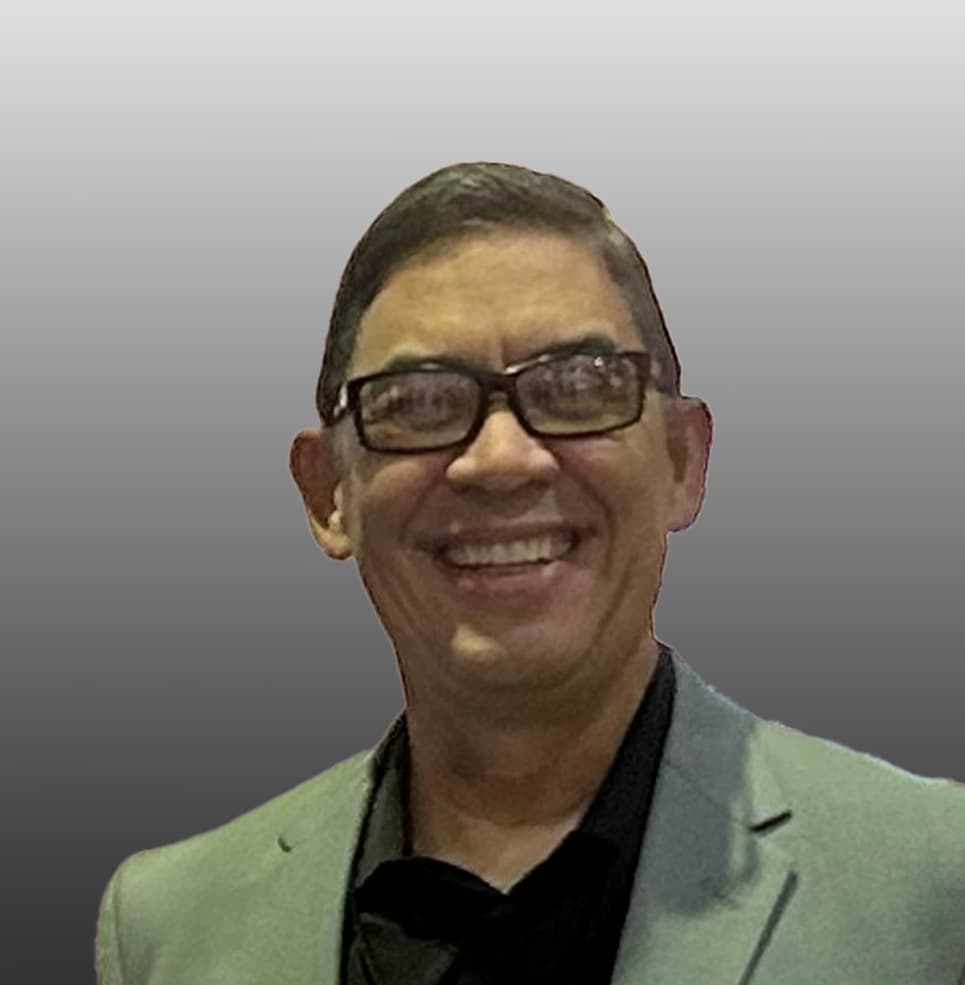
Luis Kaiulani was born in Honolulu in 1963 and spent his childhood immersed in the lush landscapes and oceanic rhythms of Hawaii. He credits this formative environment for his deep affinity with nature, but his identity also carries the powerful lineage of his Latin-American heritage—adding fire, passion, and latent tension to his creative voice. For over two decades, Kaiulani has refined a body of abstract work that bridges these dual worlds. Drawing from his Hawaiian and Venezuelan roots, his art spans paintings, sculptures, and art-objects defined by fluidity, mindfulness, and vibrant chromatic dimension. Working primarily in Miami, his studio becomes a site of synthesis—of land and sea, calm and kinetic, heritage and innovation. Kaiulani’s creative process often involves large-scale aluminum sculptures and layered paintings that respond to space, light, and movement. His work has been commissioned and installed in public spaces, including a major site at the Miami Dade College West Campus and the artscape at the Miramar Cultural Center. By weaving the grounded calm of the Hawaiian environment with the dynamism of his Latin heritage, Luis Kaiulani invites viewers into a visual realm where color, form, and space become both reflection and gesture. His work stands in quiet conversation with both tradition and modernity, charting a path that is distinctly his own.
Luis Kaiulani
Aluminum and wood
View In My SpaceLuis Kaiulani
Aluminum and wood
View In My SpaceLuis Kaiulani's aluminum works can make a line feel as though it has stepped out of a drawing and into the viewer's space. A line on paper directs the eye; a line built from metal can direct the body as well. One may walk around it, look through an opening it creates, or watch its shadow move over a wall. The current DelPuma Fine Art selection includes Crosslines and Flatlines, titles that make this translation especially clear. They suggest geometry without reducing the work to an abstract diagram. Each line has thickness, weight, surface, and a relationship to the air around it.
The short biography above describes Kaiulani's relationship to nature and several public projects. In the artworks, the more immediate question is how an apparently simple contour becomes an event in space. A crossing can imply contact or collision. A flat line may seem calm from one direction and dynamic from another. The metal holds the form still, but the viewer's changing position gives it a kind of movement. This interplay of stable material and shifting perception is central to contemporary abstract sculpture. It rewards more than a single frontal glance.
Kaiulani's official site describes a process of cutting, welding, painting, and installing work made from aluminum and wood. These verbs are as important as the list of materials. They show that an apparently effortless curve or crossing depends on decisions about construction and finish. Aluminum can support a large form without the visual mass of some other metals, while wood can introduce another temperature and texture. A combined work does not have to disguise the difference between the two. Their contrast can make the form more legible.
The DelPuma listings identify Fleur de Trefle and Gros Trefle as aluminum and wood, while Yellow Clover, Flat Rose, Crosslines, and Flatlines are listed as aluminum. That distinction matters for an informed encounter. A viewer might compare how a wood element grounds a metal form with how an all-aluminum piece uses its own surface to establish balance. Photographs show the broad silhouette but may not communicate the full effect of sheen, thickness, and joinery. The individual artwork page is the right place to confirm a specific medium and scale before imagining it in a room.
Several works in the current selection carry botanical titles: Yellow Clover, Fleur de Trefle, Gros Trefle, and Flat Rose. They invite associations with growth, luck, and the shapes of leaves or petals. Yet the pieces are not botanical illustrations. Their forms can be abstracted, flattened, enlarged, or reorganized until they occupy the boundary between a familiar natural reference and an independent sculptural language. A title gives the viewer a way in, then the object asks to be judged on its own terms. Does it open outward, gather inward, or set several directions in motion at once?
The difference between Yellow Clover and a Trèfle work can be explored through material as well as color and shape. The French word in a title may suggest a family relationship, but it does not erase the individuality of each object. One form may be compact enough to feel intimate; another may claim a larger span. Their appeal lies in that negotiation between recognition and surprise. The viewer sees a possible plant form while also seeing fabricated planes, edges, and supports. Nature becomes a starting grammar, not a demand that the sculpture imitate a particular specimen.
Kaiulani writes that his sculptures are designed with their locations in mind. This principle is evident in a practice that includes both pieces for collections and public art. A work placed outdoors can engage sky, paths, weather, and people who did not set out to visit art. Indoors, the same kind of formal intelligence operates at a different scale, in relation to walls, light, and the daily movement of inhabitants. Site does not simply provide a background. It can alter which side of a form is most often seen and how long a viewer can stay with it.
His official site lists projects including works at Miami Dade College West Campus, the Miramar Cultural Center, and Flossmoor Park. These examples matter because they show a sustained concern with art as part of lived space. The current DelPuma works should not be assumed to have the same installation requirements as those public commissions. They do, however, benefit from the same quality of attention: imagine walking toward the piece, passing it, and seeing it at different times of day. Such thinking helps reveal how a sculpture can belong to a place without becoming mere decoration for it.
A painted sculptural surface changes more than the object's mood. Strong color can make a line read clearly against an open background, while a quieter finish may bring the viewer closer to appreciate its contour. In Yellow Clover, the named color is part of the work's first invitation. In Flat Rose, the title suggests a different relation between hue, shape, and botanical memory. Color can also change the apparent weight of aluminum. A bright form may feel buoyant even when it is firmly anchored. A darker passage may make a crossing feel more decisive.
These effects are relational. The same color can read differently against a white wall, a shadowed corner, or an outdoor landscape. A photograph can convey the intended palette, but the sculpture's real environment completes it. Looking at Kaiulani's work therefore means thinking in two directions at once: what decisions the artist has built into the object, and how a setting brings some of them forward. This is not a claim that any setting will do. It is a reason to give color and space equal consideration when assessing a piece for a particular collection.
An elegant abstract sculpture can appear almost inevitable once it is finished. Kaiulani's stated process reminds us that such ease is constructed. Cutting determines proportion; welding determines how parts meet and bear weight; painting determines whether joins recede or become part of the visual rhythm. Installation determines the final orientation. These stages require both technical care and judgment about what the work should allow a viewer to see. The goal is not to make labor conspicuous for its own sake. It is to give a gesture enough structural clarity to stand in the world.
The metal line is particularly unforgiving as a compositional device because it leaves so much surrounding space visible. There is no dense image to hide an uncertain relationship. A crossing must feel intentional; a curve must lead the eye somewhere; an opening has to be proportionate to what surrounds it. Kaiulani's work rewards a slow reading of these decisions. The sense of movement one feels may come from a very small adjustment in angle or balance. Recognizing that discipline adds depth to the initial pleasure of a bold silhouette.
Kaiulani often connects his imagination to Hawaii's landscapes and to his Venezuelan heritage, a relationship the biography above already outlines. The sculptures do not require a viewer to identify an ocean wave or a particular flower to understand that connection. Natural experience can be translated into a feeling for flow, growth, color, and open space. Abstraction is valuable here because it preserves those qualities without fixing them to one image. A viewer may perceive calm in one work and kinetic energy in another, and both responses can be grounded in the objects' physical arrangements.
The work's cultural origins should be treated with care rather than turned into a formula in which one heritage stands for calm and another for intensity. Kaiulani himself offers those histories as part of his perspective, but the sculptures remain more complex than a simple pairing of opposites. They bring together observed nature, fabricated material, and the experience of place. Each object has to resolve its own formal questions. This is why the botanical and line-based pieces can belong to one practice while feeling distinct. The artist returns to an interest in growth and movement, then tests it through another contour, color, or scale.
The DelPuma Fine Art artist page currently brings together six 2025 works: Fleur de Trefle, Yellow Clover, Flat Rose, Crosslines, Flatlines, and Gros Trefle. Seen as a group, they show two useful strands of Kaiulani's practice. The clover and rose titles open a dialogue with organic form, while the line works make the language of crossing and direction more explicit. Compare them for silhouette, medium, and the amount of space each form encloses or leaves open. A piece that seems simple in a thumbnail may prove the most complex when its negative spaces are considered.
The short biography tells where Kaiulani's interests came from; the artworks show how he makes those interests visible now. Aluminum can become a sweeping gesture, a balanced crossing, or a shaped botanical allusion. Wood can add another register of material presence. The strongest choice for a collection may not be the largest or most colorful work, but the one that changes the way its surroundings are read. Kaiulani's contemporary sculpture invites this kind of sustained looking. It makes a line into an object, then makes the space around that object feel newly active.
Research source: Luis Kaiulani's official studio site. Artwork titles and media are from the current DelPuma Fine Art listings.