Mercedes Jelinek
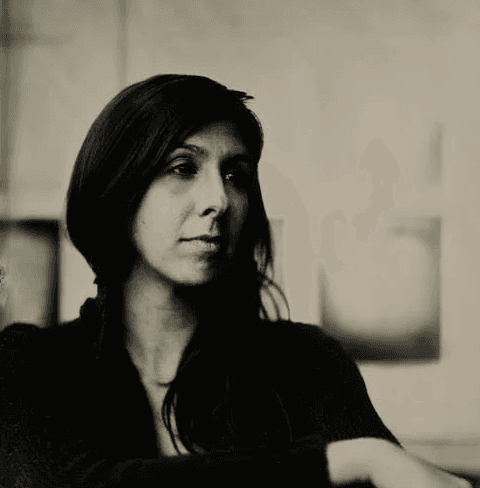
Mercedes Jelinek is an American artist and photographer based in Brooklyn, New York, whose work explores the breadth of human experience through portraiture, narrative, and experimental approaches to the photographic image. She holds a BFA in Visual Arts from the State University of New York at Purchase and an MFA from Louisiana State University. Jelinek has taught and lectured extensively, serving as a professor, visiting artist, and resident at institutions across the United States and Italy, including East Carolina University in Certaldo, Italy, Penland School of Craft, The New School Parsons, and the Yale University School of Art. She is an active board member of both Blue Sky Gallery (Portland, OR) and Penland School of Craft (Penland, NC), contributing to the advancement of contemporary photography and craft education. Her work and publications have been exhibited nationally and internationally, and her photographs are included in the permanent collections of some of the world’s most influential institutions: the Museum of Modern Art, Guggenheim Museum, Metropolitan Museum of Art, Whitney Museum, Library of Congress, Aperture Foundation, and the Getty Institute. Jelinek is known for her black-and-white portraiture, often pushing beyond traditional photographic boundaries by integrating painting, collage, and mixed-media processes. Her practice is rooted in deep curiosity about people — their stories, values, and cultural identities. She travels widely, immersing herself in the communities she photographs, creating work built on collaboration, trust, and shared experience. Her imagery reflects the complexity of contemporary life, engaging with themes of community, identity, and women’s rights within the shifting socio-political landscape of the post-COVID era, the “Me Too” movement, and the aftermath of Roe v. Wade’s overturning. Through her work, she invites viewers into a visual dialogue that is intimate, empathetic, and unafraid to confront the realities shaping the modern human condition.
Artist Works
EXPLORING THE WORK BY MERCEDES JELINEK
Portraiture as an encounter, not a capture
Mercedes Jelinek's photographs invite a viewer to think about the relationship that made an image possible. A portrait is often described as a capture, a word that implies a moment taken and held. Jelinek's own account emphasizes meeting people, learning from them, and developing work through connection and collaboration. That emphasis changes how a portrait can be read. The subject is not simply an object of observation; the image is the result of time spent across a social distance. Even when the viewer cannot know every conversation behind it, the photograph can suggest the difference between looking at someone and looking with care.
The biography above outlines her training, teaching, and institutional collections. The artworks below it call for a more immediate attention. Where does a person meet the camera? What has been left outside the frame, and how might that absence matter? Jelinek's practice does not promise complete knowledge of a subject. It makes space for the complexity of a life that exceeds any one image. This is why her contemporary portraiture can feel intimate without becoming possessive. A compelling face can draw us in while reminding us that recognition is not the same as understanding.
What black and white can reveal
Jelinek is known for black-and-white photographic work. Without color as a first cue, the eye may pay closer attention to tonal range, light, gesture, and the distance between a subject and surroundings. This does not make the image automatically more honest or timeless. Black and white is a formal decision that shapes what a viewer notices and how a moment feels. A face can emerge gently from shadow or confront us through strong contrast. The choices are part of the work's argument about presence, rather than a neutral way of recording reality.
Her official biography also notes that photographs may be transformed through painting and collage. Such interventions can disturb the expectation that a photograph is a sealed record of an instant. A mark added afterward makes a second time visible: the moment of the original image and the later act of interpretation. The resulting object can ask us to see a portrait as both evidence and construction. A viewer need not choose between respect for the photographed person and attention to the artist's hand. The strongest work keeps both relationships in view.
Community in the frame
Jelinek's stated interest in values, traditions, and everyday stories suggests that community is not merely a topic imposed on photographs after they are made. It is part of the method: people meet, speak, and decide how to participate. Her projects have taken her into different places and social settings, but the aim is not to produce a visual inventory of difference. A portrait can be specific to one person and also raise questions about belonging, shared history, or who has been allowed to represent a place. The individual remains more than an example of a general theme.
This matters especially when a viewer encounters a single mixed-media work detached from a broader project. A title or image may suggest an intimate story, but the full context can be larger than the catalog can provide. Rather than inventing a biography for a subject, one can ask what the work reveals about attention and what it deliberately leaves open. The gap can be ethically productive. It allows the photographed person to retain a life outside the frame while still inviting a viewer into a relationship of curiosity and respect.
The photograph as a surface for further thought
The two works currently listed at DelPuma Fine Art—Never Stay Put and I wish I Knew You—are cataloged as mixed media. That designation suggests a practice that does not stop with a conventional print, but it does not disclose the exact materials in these particular pieces. The artist's broader use of painting and collage offers a way to look at the possibilities without inventing a technique. An added layer may slow the image down or draw attention to a part of it. A covered or fragmented passage can make absence as important as visibility.
The mixed-media object asks for the same careful reading as the photographic image. Where does one material seem to interrupt another? Does an alteration strengthen the subject's presence or make our access to it less certain? Neither effect is automatically preferable. A work about human complexity may need both. The viewer can respond to the immediate visual force of the piece while acknowledging that the artist has made choices after the camera's shutter closed. Those later decisions turn the image into an ongoing question rather than a fixed answer about its subject.
Two titles about distance and attachment
Never Stay Put suggests movement, restlessness, or a refusal to be fixed in one role. I wish I Knew You speaks more directly of distance between people. These are interpretive openings, not complete descriptions of the artworks or the people who may appear in them. They encourage a viewer to consider how a portrait can hold an unmet desire for connection. A photograph freezes a visible moment, yet its title can insist that the subject's life is in motion or that the viewer's knowledge remains incomplete. The tension between still image and moving life can be deeply affecting.
The two 2023 works can be compared without treating them as a matched pair. One title pushes against being placed; the other acknowledges the wish to come closer. Their coexistence on this page may reveal a productive range in Jelinek's concerns. A viewer may be drawn first to the more assertive phrase and later to the quieter one, or the reverse. What matters is how the actual image and materials complicate the words. A strong artwork does not simply illustrate its title. It makes the viewer return to the title with a changed sense of what it could mean.
Photobooks, sequence, and a larger story
Jelinek's projects have also taken the form of photobooks, including These Americans and Lost: Spruce Pine. A book changes the encounter with photography. Images are viewed in sequence, with pauses created by pages and relationships established through editing. An individual print or mixed-media artwork has to hold its own space, but the experience of working in sequences can shape how an artist thinks about visual narrative. What is shown first? What detail gains meaning because of what came before it? Such questions remain relevant even when a viewer sees only one work.
The photobook context is a reminder not to mistake a single image for a complete account of a community. A series can let different voices and moments coexist without forcing them into one representative face. Jelinek's interest in collaboration and human stories is well served by that form. For the two works available here, a viewer can bring the same sensitivity to sequence in a smaller way. Look from title to image, from image to material, and back again. Each pass may reveal a different part of the narrative, while leaving room for what cannot be fully told.
Looking at women, rights, and representation
Jelinek's official account names women's equality among the issues that inform her practice. Portraiture can contribute to that conversation without turning every subject into a symbol. The challenge is to show a person whose life is shaped by social structures while preserving the irreducible particularity of that person. An image can ask who is listened to, who is believed, and how stories are made visible. It need not provide a slogan for those questions to matter. The way a subject meets the camera can be political precisely because it remains personal.
Painting and collage can add another level to such a conversation by showing how images themselves are constructed and contested. A photograph has often been treated as straightforward evidence, but its frame, circulation, and interpretation affect what people believe they see. Jelinek's mixed-media practice can make that instability visible. For a viewer, the responsible response is not to claim an entire social story from one work. It is to stay alert to the relationship between image and context, and to let the subject remain a person rather than a case study.
Meeting Jelinek at DelPuma Fine Art
The current DelPuma Fine Art selection offers a focused encounter with Never Stay Put and I wish I Knew You, both dated 2023 and listed as mixed media. Their images and individual specifications are the right starting point for a collector. Look beyond the immediate subject to the work's surface, framing, and emotional distance. Does the composition ask for closeness or hold the viewer back? How does the title change the question? The artworks may speak differently to different viewers because each person brings experiences of movement, attachment, and incomplete knowledge.
The biography above sets Jelinek within a broader photographic and educational career. The works beneath it make a more intimate proposition: that an image of a person can carry both a wish to know and an acknowledgment that complete access is impossible. This tension gives her contemporary photography its depth. A viewer may begin by seeing a face or a figure, then realize that the real subject is also the act of looking. The artwork asks us to spend time with that act and to consider what care it requires.
Research sources: Mercedes Jelinek's official site and her SUNY Purchase profile. Artwork titles and media are from the current DelPuma Fine Art listings.