
Sebastian Caicedo
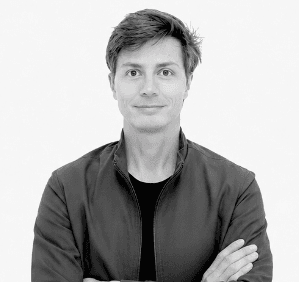
Sebastián Caicedo is a Colombian artist, designer, and architect whose multidisciplinary practice moves fluidly between art, design, and architecture. Drawing on more than a decade of professional experience, his work combines a strong conceptual foundation with a refined understanding of materials, form, and space. Caicedo holds a Master of Fine Arts from Universidad de los Andes and pursued graduate studies in Design at the Istituto Europeo di Design in Milan, as well as Architecture at Parsons School of Design in New York. His professional background also includes experience with internationally recognized architecture firms Skidmore, Owings & Merrill (SOM) and Netch, experiences that helped shape the precision and material sensitivity that continue to inform his artistic practice. At the center of Caicedo’s work is an ongoing exploration of industrial materials, particularly aluminum. Rather than treating the material solely for its functional qualities, he transforms it into a medium for investigating surface, structure, light, and perception. Through this process, something typically associated with architecture and industry takes on a more expressive and unexpected character. His work resists easy categorization, often occupying the space between painting, sculpture, and object. Clean geometries and carefully considered surfaces are balanced by subtle shifts in reflection, texture, and light, allowing each piece to change in response to its surroundings and the viewer’s perspective. Rooted in his background across multiple creative disciplines, Caicedo’s work brings together technical rigor and artistic experimentation, resulting in a visual language that feels both architectural and distinctly contemporary.
Artist Works
EXPLORING THE WORK BY SEBASTIÁN CAICEDO
When aluminum appears to fold like paper
A first encounter with Sebastián Caicedo's work can make a familiar material seem uncertain. A folded plane may suggest paper, yet the object has the lasting presence of aluminum. That difference between what the eye expects and what the object actually is gives his sculpture its immediate energy. The viewer has to reconsider the apparent weight of a crease, the apparent softness of an edge, and the distance between a manufactured surface and a hand-shaped form. In Caicedo's work, material is never a neutral support. It is part of the question the artwork poses: how much of what we believe about an object comes from seeing it, and how much comes from assumptions we carry into the room?
The contrast matters because aluminum usually belongs to a vocabulary of construction, transportation, and industrial precision. Caicedo redirects those associations toward delicacy and movement. An edge can look freshly bent; a plane can seem to hover despite its solidity. The work invites a close look at what a fold does to light. One side brightens while an adjacent face turns quiet, and a slight change in viewing angle can reverse their relationship. What looks like a simple geometric decision is also a way to make a still object behave differently as a person walks past it. This responsive quality helps place his practice between contemporary sculpture and perceptual art.
A dialogue between sculpture and architecture
Caicedo's work is informed by architectural thinking, but it does not function as a small model of a building. Architecture asks how an object organizes space and how a person moves in relation to it. Those questions are useful here. A sculptural panel establishes a front, a side, a shadow, and a surrounding field of empty wall. Each contributes to the composition. The work may be approached as an image from a distance, then understood as an object once its depth becomes apparent. Rather than choose permanently between painting and sculpture, Caicedo uses the tension between them to hold a viewer's attention.
The modular character of some compositions is especially revealing. Repeated units can create a rhythm without becoming identical. Small differences in angle or spacing make the eye move across the surface and compare one part with the next. In an architectural setting, this rhythm can echo a grid, a window, or the lines of a room while still asserting an independent visual order. The result is not merely decorative coordination. It is an encounter between two systems of space: the space a building gives us and the space the artist constructs within it. This makes scale, wall color, and the direction of light meaningful parts of the viewing experience.
Geometry made open rather than rigid
Geometric art can sound fixed or mathematical, yet Caicedo's forms leave room for change. A cut or fold introduces a line that may be read as a boundary from one position and as an opening from another. Repetition gives the work coherence; variation keeps it from becoming a pattern that can be understood in a single glance. A viewer might notice the overall arrangement first, then discover how individual planes seem to lean, lift, or press against neighboring ones. The work rewards this slower inspection. It asks us to think about form as a set of relationships rather than a collection of isolated shapes.
Color adds another variable. A restricted palette can make shadows and reflective surfaces more pronounced, while stronger contrasts can produce a sense of visual movement across the modules. The artist's documented works include lacquered aluminum compositions in which color is inseparable from the geometry beneath it. Light does not simply illuminate a finished color scheme; it alters how the scheme appears. Even a work made largely in white can display several shades as planes turn toward or away from the light. This is one reason photographs provide only a partial introduction. The full effect depends on how a particular object occupies a particular place at a particular moment.
The useful uncertainty of appearance
A 2025 presentation of Caicedo's work emphasized a perceptual reversal: aluminum sculptures could look as delicate as folded paper. That observation is more than a technical trick. If a metal object appears fragile, viewers become aware of the habits that help them classify materials at a glance. The apparent contradiction slows down recognition and encourages a closer look. Caicedo's surfaces make the eye revise its first conclusion, sometimes more than once. The result can be playful, but it also carries a serious question about the reliability of visual evidence. A work can be physically stable while remaining unsettled in our perception of it.
This uncertainty connects sculpture to everyday experience. We routinely infer texture, weight, and flexibility without touching what we see. Caicedo gives those quick judgments a visible subject. The sculptural form may suggest a gesture of bending that happened long ago, yet the metal holds that gesture indefinitely. A viewer can imagine the process without seeing it performed. The work therefore compresses two kinds of time: the time of making, when a surface was shaped, and the time of looking, when its contours are rediscovered. Seen this way, a fold becomes both a formal event and a record of transformation.
How process becomes visible
Cutting, joining, and repeating are not hidden behind an illusion of spontaneous form. They are part of the visual language. The viewer can follow how one segment appears to continue into another, where a line changes direction, and how the whole composition depends on many smaller decisions. Caicedo has described his artworks as the outcome of accumulated observations and references rather than a single sudden moment of inspiration. That account encourages a patient reading of the objects. What appears simple at a distance may be built from sustained adjustments to proportion, surface, and the relationship between parts.
The process also suggests why an artist trained across different fields might resist a strict division between art and design. Design often requires a clear understanding of how a material behaves and how a structure is assembled. Art can use that knowledge without being confined to a practical function. In Caicedo's practice, technical control makes perceptual ambiguity possible. Precision allows a shape to appear effortless. The point is not to display engineering for its own sake, but to use material intelligence to create an experience that remains visually open. This is where his architectural background becomes a way of thinking rather than merely a biographical credential.
Looking at the work in a room
Placement is particularly important for a sculptural work that relies on folds and changing light. A straight-on view can reveal its overall balance, while a side view may disclose its depth and the manner in which individual elements meet. Before choosing a location, it helps to consider the path a person takes through the room. Will the work be seen in passing, or from a place where someone can stop and compare its parts? Will daylight travel across it during the day? These are not questions with one correct answer. They help identify the conditions under which the object's material and geometry can be experienced fully.
A quiet wall can give a complex surface room to register. At the same time, nearby architectural lines may create an interesting dialogue with the work's own grid or folds. The viewer should also consider shadows as part of the composition. A shadow can extend a form beyond its edge or make a shallow plane feel deeper. If a piece appears light or paperlike, the knowledge that it is metal adds another layer of interest that cannot be communicated by color alone. This is why contemporary aluminum sculpture deserves to be approached as a spatial experience, not simply as a flat image selected for a wall.
A contemporary approach to permanence and change
Caicedo's work can be understood through a productive paradox. The material promises durability, but the form can suggest an action still in progress: folding, opening, turning, or shifting. That impression of movement exists in a fixed object. The viewer supplies the missing motion by imagining how the form came to be and by moving around it. In this respect, the work makes change available without requiring motors, screens, or a moving installation. The experience is created through material, geometry, light, and the body's own position in space.
The approach also explains why a single image seldom settles the question of what a Caicedo artwork is doing. A photograph can document an arrangement and help identify a work, but its apparent weight and surface can change dramatically in person. The artist's practice belongs to a broad contemporary conversation about how objects shape perception, yet its emphasis on folded industrial material gives that conversation a distinct physical focus. Viewers need not know an art-historical category to respond. They can begin with the immediate puzzle of the object and follow that curiosity toward its structure, process, and relationship to the room.
Following Sebastián Caicedo at DelPuma Fine Art
DelPuma Fine Art introduces Sebastián Caicedo as an artist whose work crosses sculpture, design, and architecture. The most rewarding way to explore that practice is to look for the relationship between its formal restraint and its perceptual surprises. Notice where a plane catches light, where a crease appears unexpectedly soft, and how repeated elements change from one part of a composition to another. These details distinguish an individual work from a general idea of geometric sculpture. They also make the work approachable for someone encountering Caicedo for the first time: close attention is more useful than trying to assign an immediate label.
The artist's page can serve as a starting point for that exploration as works become available. A prospective collector may wish to ask about a particular piece's materials, dimensions, installation needs, and the way its surface responds to lighting. Those practical questions are also interpretive ones, because this art depends on a viewer's physical encounter with it. Caicedo's sculptures make ordinary acts of seeing feel less automatic. They invite us to test an initial impression, change position, and discover that a durable object can still appear remarkably fluid. That continued exchange between certainty and surprise is central to the appeal of his work.
Research: reporting on Caicedo's aluminum sculptures and process and the SoyArte 2024 catalogue. His current biography is presented by DelPuma Fine Art.